Brazilian truco rules
How to play truco paulista with four players, two against two: the vira and the manilhas, the rounds, the truco calls and the score. These are the rules the Barajamos table applies; at the end you will see what changes at other tables.
Goal
Two pairs play. The first pair to reach 12 points wins the game.
Without truco, each hand is worth 1 point. Truco calls make the hand worth more.
Players and pairs
There are four players in two fixed pairs. Partners sit opposite each other and play goes anticlockwise.
The cards
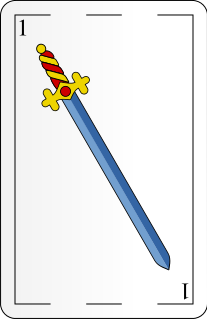
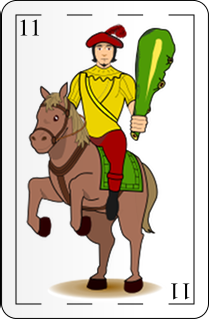
Barajamos uses the 40-card Spanish deck: ace to seven, plus the jack, knight and king of the four suits (coins, cups, swords and clubs). There are no eights or nines.
In Brazil truco is usually played with the French deck, without eights, nines, tens and jokers. The order of the cards is the same: the king plays the K, the knight the J and the jack (the sota) the Q.
Everyone gets three cards and does not have to follow suit: you play the card you want.
Vira and manilhas
After the deal, the next card of the stock is turned face up: the vira. It belongs to nobody and stays in view for the whole hand.
The four cards of the number after the vira are the manilhas, stronger than any other card. The sequence is 4, 5, 6, 7, jack, knight, king, ace, 2 and 3, and after the 3 it goes back to the 4:
| Vira | Manilhas |
|---|---|
| Four | The fives |
| Five | The sixes |
| Six | The sevens |
| Seven | The jacks |
| Jack | The knights |
| Knight | The kings |
| King | The aces |
| Ace | The twos |
| Two | The threes |
| Three | The fours |
Among the manilhas, the suit decides. From highest to lowest: clubs (the zap), cups (the copas), swords (the espadilha) and coins (the pica-fumo).
Order of the cards
First the four manilhas and then the other cards, from highest to lowest: 3, 2, ace, king, knight, jack, 7, 6, 5 and 4, without the number that is manilha in that hand. Outside the manilhas the suit does not count: cards of the same number tie.
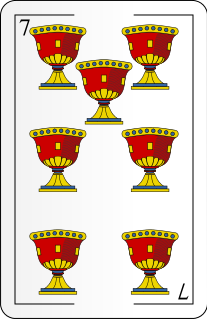 Example with a seven as the vira: the manilhas are the jacks.
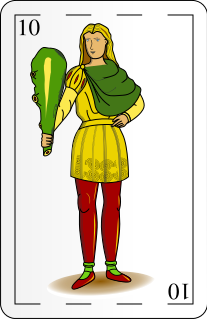 Jack of clubs (zap)
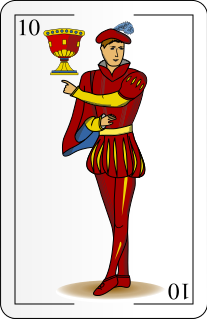 Jack of cups (copas)
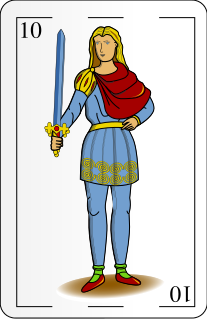 Jack of swords (espadilha)
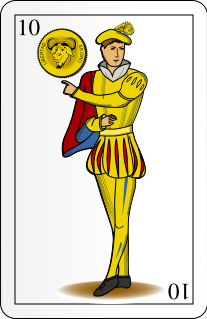 Jack of coins (pica-fumo)
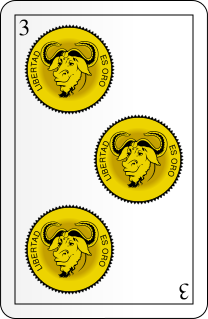 The four threes
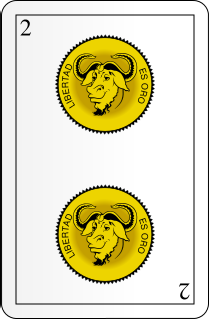 The four twos
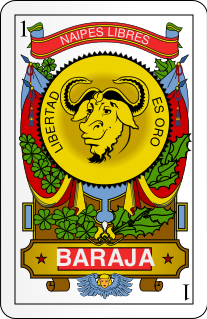 The four aces
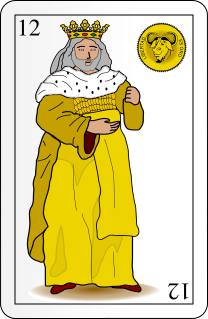 The four kings
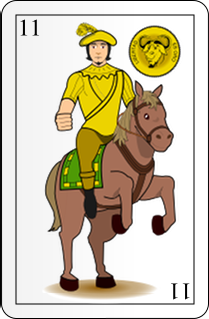 The four knights
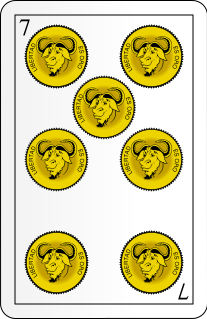 The four sevens
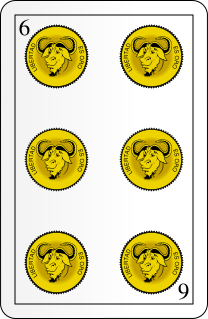 The four sixes
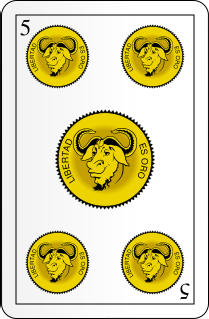 The four fives
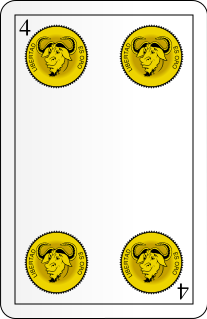 The four fours
The deal and the lead
Each player gets three cards, one at a time. The player sitting to the right of the dealer is the lead (mão): they play first. Each hand, the next player deals.
On Barajamos the dealer of the first hand is drawn at random.
Rounds and ties
Each hand has up to three rounds. In each round all four play a card and the highest wins. If the two highest cards are worth the same and belong to different pairs, the round is tied; if they belong to two partners, the round goes to their pair.
Whoever won the previous round leads the next one. After a tie, whoever opened the tied round leads again.
| Rounds | The hand goes to |
|---|---|
| One pair wins two | That pair (if it won the first two, the third is not played) |
| The first is tied and a pair wins the second | The pair that won the second |
| A pair wins the first and the second is tied | The pair that won the first |
| The first two are tied | The pair that wins the third |
| One for each pair and the third is tied | The pair that won the first |
| All three are tied | Nobody: the hand scores no point |
Truco, Six, Nine and Twelve
Without truco, the hand is worth 1 point. On your turn, before playing your card, you can call truco. Anyone can make the first truco call; to raise, only the pair that accepted the last bet, on their turn or when answering.
| Call | Accepted, the hand is worth | If they run, the caller takes |
|---|---|---|
| Truco | 3 | 1 |
| Six | 6 | 3 |
| Nine | 9 | 6 |
| Twelve | 12 | 9 |
Whoever answers accepts, runs or raises. Raising already accepts: calling Six in reply to a truco accepts the truco and raises the bet. If the pair runs, the hand ends and the caller takes what the hand was already worth. After Twelve there are no more raises.
The whole pair answers. If both partners vote the same, it is decided at once. If not, they have ten seconds to agree and, without agreement, the pair runs.
The truco applies to the whole hand, not just the round in which it was called.
The covered card
From the second round on, on your turn, you can play a card covered (face down). It is worth nothing: it neither wins nor ties the round, and nobody else sees what it was. You cannot cover in the first round.
The hand of eleven
When one pair reaches 11 points and the other does not, the next hand is the hand of eleven (mão de onze). Before playing, each player of the pair on 11 sees their partner’s cards, and the two decide whether to play the hand or run.
- If they play, the hand is worth 3 points to whoever wins it.
- If they run, the other pair takes 1 point. Without agreement in ten seconds, the pair runs.
- Nobody can call truco in the hand of eleven.
The iron hand
With both pairs on 11 points, the iron hand (mão de ferro) is played. The cards are dealt as usual, with a vira, but nobody sees even their own cards: everyone chooses blind which to play, and the card turns over as it lands on the table. There is no truco.
Whoever wins the iron hand reaches 12 and wins the game. If all three rounds are tied, another iron hand is played.
Scoring and the end of the game
Points are scored at the end of each hand; the hand summary shows who won and how much. If nobody has reached 12, the next hand is dealt. The game ends when a pair reaches 12 points, and the final score can go past 12 if the last hand was worth more than one point.
If someone loses the connection
Losing the connection gives nobody any points. Your seat waits for a minute and, if you come back, you get your seat and your cards back. If you do not come back, the game is cancelled and everyone returns to the room. If it drops while a vote is pending, your vote counts as “no”.
How it is played on Barajamos
These choices are fixed at the Barajamos table:
- Truco paulista with the new manilha, up to 12 points.
- The 40-card Spanish deck instead of the French one, with the same order.
- The dealer of the first hand is drawn at random, and the cards are dealt one at a time, without cutting.
- The pair answers calls and the hand of eleven with a vote from both partners, with ten seconds to agree.
- There are no penalties: the table does not let you call truco in the hand of eleven or the iron hand, or cover in the first round.
- When answering a truco, nobody sees their partner’s cards; that only happens in the hand of eleven.
Variants at other tables
Truco changes from one table to another. Some tables play with fixed manilhas, as in truco mineiro, some let you see your partner’s cards when answering a truco, and there are games for two or six players. You will find more information on the Portuguese Wikipedia. On Barajamos it is played with the rules on this page.
Glossary
- Hand (mão)
- What is played with each deal: up to three rounds. The player who leads first is also called the mão.
- Round (rodada)
- Each turn in which all four play a card.
- Vira
- The card turned face up after the deal. It tells you which cards are the manilhas of the hand.
- Manilhas
- The four cards of the number after the vira, the strongest of the hand.
- Zap, copas, espadilha and pica-fumo
- The manilhas of clubs, cups, swords and coins, from highest to lowest.
- Trucar
- To call truco: to make the hand worth 3.
- Run (correr)
- To refuse a call or the hand of eleven.
- Covered card
- A card played face down, worth nothing.
- Hand of eleven
- The hand in which a pair is on 11 points and decides whether to play.
- Iron hand
- The hand with both pairs on 11, played blind.
Shall we try it?
The best way to learn is to play a hand. Against bots, you go at your own pace.