Chinchón rules
How to play Chinchón with three to six players: the cards, the turn, the melds, closing and scoring. These are the rules the Barajamos table applies; at the end you will see what changes at other tables.
Goal
Everyone plays for themselves. In each hand you try to meld your seven cards into sets and runs so that few points are left unmatched. Points add up from one hand to the next and whoever goes over 70 is eliminated.
The last player still in the game wins. Whoever closes with Chinchón also wins on the spot: seven consecutive cards of the same suit.
Players
Three to six people play, each on their own: there are no pairs. Play goes anticlockwise.
The cards
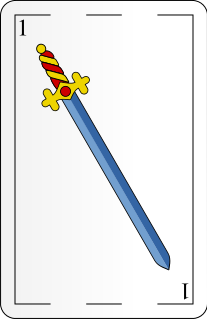
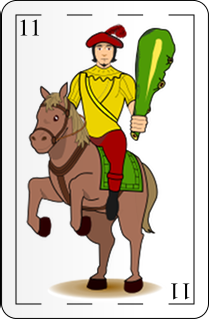
The 48-card Spanish deck is used: ace to nine plus the jack, knight and king of coins, cups, swords and clubs. With three or four players one deck is used. With five or six, two are shuffled together, so every card appears twice.
Each card left unmatched at the end of the hand counts its number. The court cards weigh the most:
| Card | Points |
|---|---|
| Ace | 1 |
| Two | 2 |
| Three | 3 |
| Four | 4 |
| Five | 5 |
| Six | 6 |
| Seven | 7 |
| Eight | 8 |
| Nine | 9 |
| Jack | 10 |
| Knight | 11 |
| King | 12 |
The deal and the lead
Each player gets seven cards. The next card is turned face up in the middle and starts the discard pile. The rest stays face down and forms the stock.
The lead of the first hand of the game is drawn at random. In each following hand, the next player still in the game leads, going anticlockwise. The lead plays first.
Nobody gets an eighth card: the lead starts by drawing, like everyone else.
The turn
On your turn you do two things, in this order:
- Draw a card: the top one of the stock or the last one of the discard pile, which is face up.
- Discard a card face up. It can be any of the eight you hold at that moment.
When you discard you can close the hand, if you meet the condition (see “Closing the hand”). If you do not close, the turn passes to the next player.
If the stock runs out and you draw from it, all the cards in the discard pile are shuffled to make a new stock.
Melds
There are two kinds of meld, and each card can only be in one:
- Set: three or more cards of the same number, of any suit. For example, three sevens.
- Run: three or more consecutive cards of the same suit. For example, the five, six and seven of cups. Since there are eights and nines, seven to jack of the same suit is also a run.
A run does not wrap round: the ace only joins the two and the king comes after the knight, but the king and the ace are not consecutive.
With two decks, a set can include two identical cards, such as two fives of coins. A run cannot.
Example hands
Seven cards as the table melds them, with what the unmatched ones add up to:
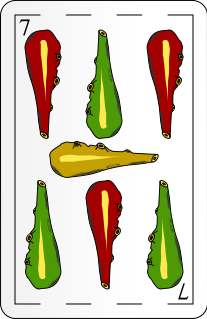
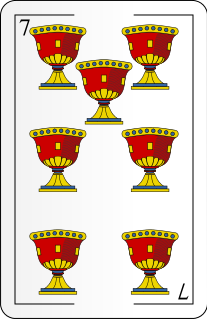
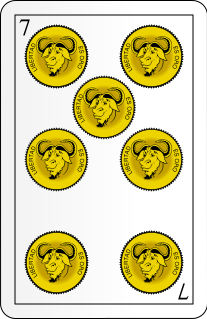
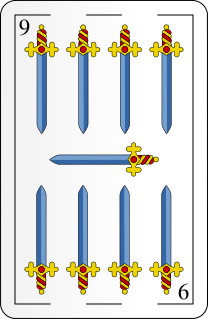
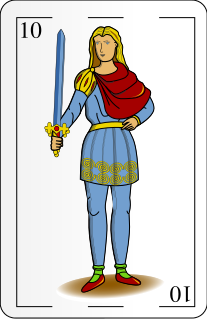
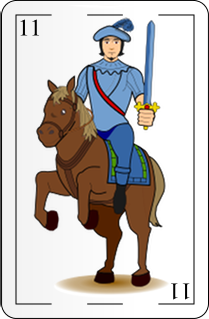
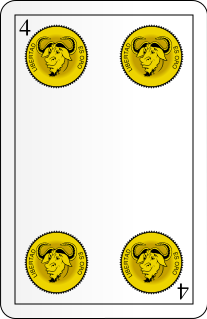 Three sevens and a run of swords from nine to knight. Only the four of coins is left: 4 points. You can close.
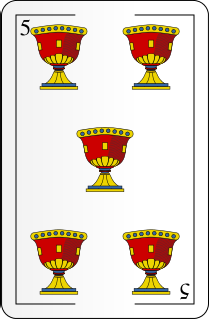
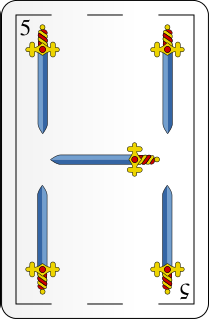
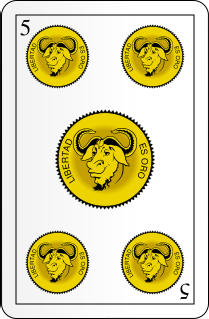
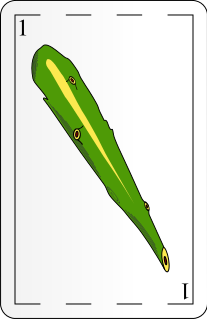
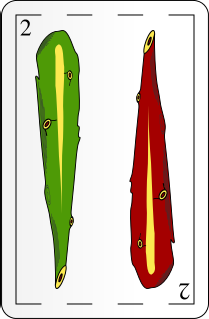
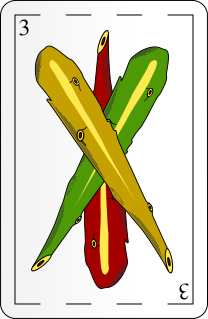
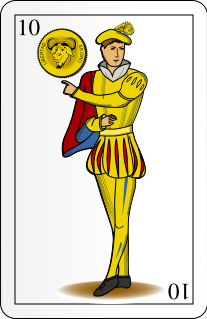 Three fives and a run of clubs from ace to three, but the unmatched jack of coins counts 10: you cannot close.
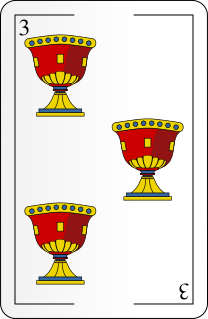
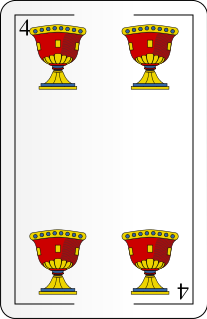
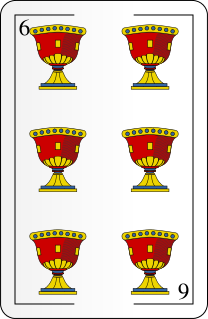
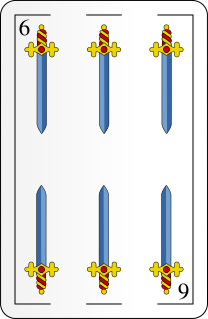
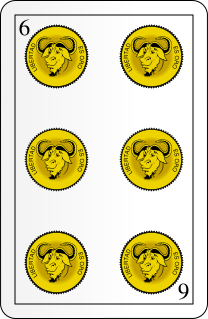 The six of cups does more with the other sixes, and the run stays three to five. Only the ace of clubs is left, counting 1.
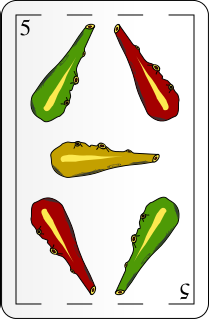
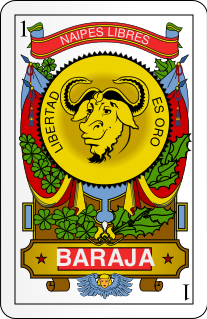
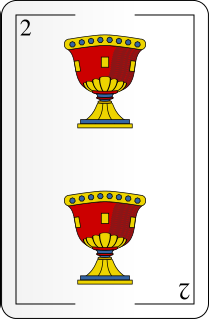
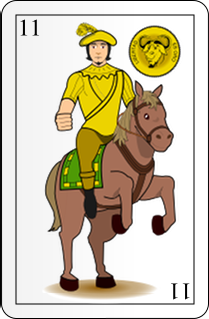
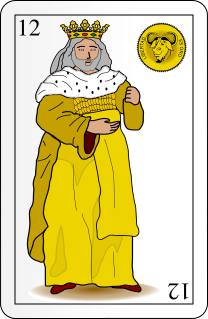 Knight, king and ace of coins are not a run, because the king does not join the ace. With the three fives melded, the unmatched cards add up to 26.
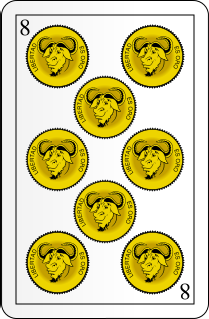
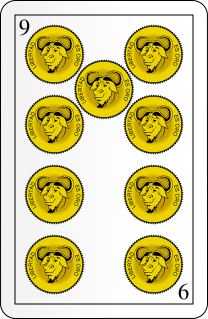
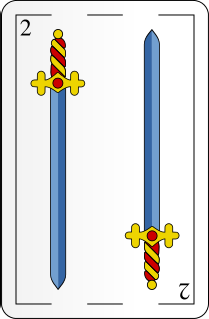 A run of coins from seven to jack and three twos: all seven cards melded in two groups, 0 points left. If you close like this, you take off 10.
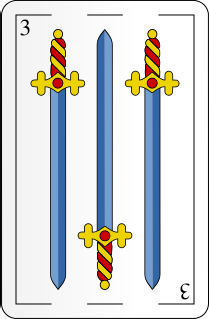
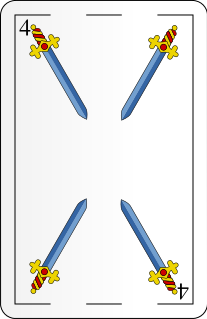
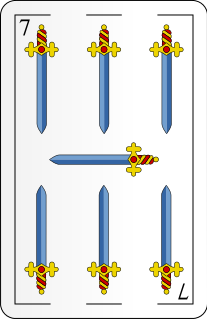
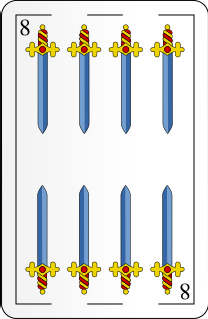 Three to nine of swords: seven in a row of the same suit, 0 points left. It is Chinchón: close with it and you win the game.
Closing the hand
You close when you discard, if the seven cards you keep leave 5 unmatched points or less. The card you close with goes face down and does not count. You can close on any turn, including the first.
The hand ends at that moment. Everyone shows their cards and the score is counted:
- Whoever closes adds their unmatched points, from 1 to 5.
- Minus ten: if whoever closes has all seven cards melded in several groups, they add nothing and take off 10 points.
- Chinchón: if the seven cards are a single run of the same suit, whoever closes wins the game on the spot.
- Each opponent adds what they have left unmatched after laying off cards.
Laying off cards on other melds
Whoever closes leaves their melds face up. Then, in turn starting from whoever closed, each opponent forms their own melds and can lay off their unmatched cards on those already on the table: the closer’s and those of opponents who laid down before. A card laid off no longer counts.
On a set you can lay another card of the same number. On a run, the card of the same suit that extends it at one end, and then the next one.
For example, if you close with three sevens and the run of swords from nine to knight, the opponent holding the seven of swords lays it on your sevens, and whoever has the king of swords extends your run.
If whoever closes does so with minus ten or with Chinchón, nobody can lay off cards on their melds. On other opponents’ melds, yes.
Scoring, elimination and the end
Each hand’s points are added to everyone’s total, and minus ten can take you below zero. Whoever goes over 70 is eliminated; on exactly 70 you are still in the game.
If after a close only one player is left in the game, they win on the spot. If nobody is left, because the same close has taken everyone over 70, the game ends in a draw, with no winner. If two or more are left, the host opens the next hand.
Rejoining
Each player has two rejoin chips per game. If you are eliminated, you can spend one in a hand’s summary and get back into the game with the highest score among those still playing.
It is only possible if at least two players are still in the game: if a close leaves only one, that player has already won, and if it leaves nobody, the game ends in a draw. Chips are not recovered between hands and, without chips, elimination is final.
Rejoin chips belong to each game and have nothing to do with the chips you earn by playing on Barajamos.
If someone loses the connection
Losing the connection gives nobody any points. Your chair waits for you for a minute and, if you come back, you get your seat and your cards back. If you do not come back, the game is cancelled and everyone returns to the room.
How it is played on Barajamos
These choices are fixed at the Barajamos table:
- The 48-card deck without jokers; with five or six players, two decks.
- Everyone gets seven cards and a face-up card starts the discard pile.
- Court cards count their number: jack 10, knight 11 and king 12.
- You close with 5 unmatched points or less, on any turn.
- All seven cards melded take off 10 and Chinchón wins the game.
- Whoever goes over 70 is eliminated, and each player has two rejoin chips. If a close takes everyone over 70, the game ends in a draw.
- The table sorts your hand, finds the way of melding that leaves you fewest points and, when someone closes, lays off for everyone the cards that can be laid off.
- When you choose the card to discard, the table tells you how many points you would have left unmatched. The “Close” button only lights up when you can close.
Variants at other tables
Chinchón changes a lot from one table to another. It is common to play with the 40-card deck and the ace of coins as a joker, or with 50 cards and two jokers. It is also played to 100 points instead of 70, with court cards counted differently or without allowing anyone to close until everyone has played a round. In parts of Argentina and Uruguay it is also called conga. You will find more information on Wikipedia. On Barajamos it is played with the rules on this page.
Glossary
- Hand
- What is played with each deal, until someone closes. The player who starts is also called the lead (mano).
- Stock
- The face-down cards you draw from.
- Discard pile
- The cards discarded face up. Only the last one can be drawn.
- Set
- Three or more cards of the same number.
- Run
- Three or more consecutive cards of the same suit.
- Unmatched card
- A card that is in no meld. At the end of the hand it counts its number.
- Close
- To end the hand when you discard, with 5 unmatched points or less.
- Minus ten
- Closing with all seven cards melded: whoever closes takes off 10 points.
- Chinchón
- Seven consecutive cards of the same suit. Whoever closes with them wins the game.
- Lay off
- To place an unmatched card on a meld already on the table, so that it does not count.
- Rejoin
- Getting back into the game after going over 70, with the highest score among those still playing.
Shall we try it?
You learn by playing. Against bots you go at your own pace and the table tells you when you can close.