Tute rules
How to play Tute with the Spanish deck: the cards and their values, the tricks, the declarations and the three modes on Barajamos, classic, cabrón and bidding. These are the rules the table applies; at the end you will see what changes at other tables.
The three modes
All three share the cards, tricks and declarations. What changes is who plays with whom and how you win:
- Classic: four players in two pairs. The pair that scores more points wins the hand and the first pair to win four hands wins the game.
- Cabrón: three or four players, each for themselves. You play not to lose the hand, and each lost hand is a letter of CABRÓN.
- Bidding: three players. The highest bidder chooses trumps and plays alone against the other two. The game is to 500 points.
The cards and their values
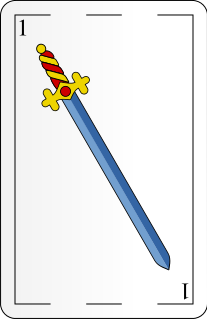
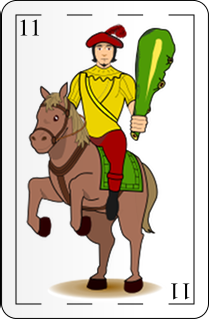
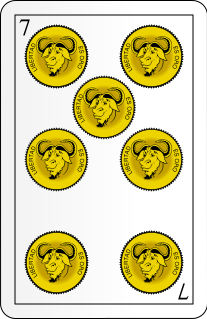
It is played with the 40-card Spanish deck: ace to seven plus the jack, knight and king of the four suits, without eights or nines. Bidding Tute and three-player cabrón also remove the twos.
From high to low: ace, three, king, knight, jack, seven, six, five, four and two. The three comes right after the ace, above the king.
| Cards | Points |
|---|---|
| Aces | 11 |
| Threes | 10 |
| Kings | 4 |
| Knights | 3 |
| Jacks | 2 |
| Sevens | Worth nothing |
| Sixes | Worth nothing |
| Fives | Worth nothing |
| Fours | Worth nothing |
| Twos | Worth nothing |
All the cards together add up to 120 points. Sevens, sixes, fives, fours and twos are worth nothing: they are the blank cards. Whoever wins the last trick of the hand adds ten more points, the ten for the last trick.
The deal, the lead and trumps
All the cards are dealt, one at a time and anticlockwise, starting with the lead: the player sitting to the dealer’s right. The lead plays to the first trick, except in bidding Tute, where whoever wins the auction leads. Play also goes round to the right.
| Table | Cards in play | Cards each |
|---|---|---|
| Classic, four in pairs | 40 | 10 |
| Four-player cabrón | 40 | 10 |
| Three-player cabrón | 36 | 12 |
| Bidding, three players | 36 | 12 |
Trumps, the suit that rules, beat any card of another suit. Each mode sets them its own way: in classic Tute the last card dealt sets trumps, which belongs to the dealer and is shown to everyone; in cabrón you start with no trumps and the first declaration sets them; in bidding Tute whoever wins the auction chooses them.
On Barajamos the first dealer is drawn at random. After that, the deal passes to the player on the right.
Following suit, beating, trumping and overtrumping
Whoever leads the trick plays the card they want. The others, in turn, have these obligations:
- Follow suit: if you have cards of the suit led, you must play one.
- Beat: as long as nobody has trumped, you must beat the highest card of that suit on the table, if you can. If someone has already trumped, following suit is enough.
- Trump: if you do not have the suit led, you must play a trump.
- Overtrump: if someone has already trumped, you must play a trump higher than those on the table. If you cannot, you play any card you like.
- If you have neither the suit led nor any trump, you play any card.
The obligations apply even if your partner is winning the trick. While there are no trumps, which in cabrón lasts until the first declaration, you cannot trump: if you do not have the suit, you play any card you like.
On Barajamos the table only lets you play the cards that are allowed: if you must follow suit, beat or trump, the others stay locked.
The tricks
The trick goes to the highest trump played or, if there is none, the highest card of the suit led. A card of another suit that is not a trump never wins. Whoever wins the trick takes it with its points and leads the next one.
All the cards are played, so there are as many tricks as each player has cards. The last one gives the ten for the last trick.
On Barajamos the finished trick stays in view for a moment before it is gathered.
Declarations: the twenty and the forty
The king and knight of the same suit form a declaration. They are worth 40 points if they are trumps (the forty) and 20 if they are another suit (the twenty). Declaration points are added to those from the tricks.
In classic and bidding Tute you declare from your hand when you win a trick: in classic Tute, both players of the pair that wins it; in bidding Tute, only whoever won the auction. Each player declares only once per trick. You must hold the king and the knight in your hand at that moment: if you have already played one of them, that declaration is lost. After the last trick there are no more declarations.
If you have several declarations, the forty comes first and, of two twenties, the one in the suit you have fewer cards of. The rest wait for the next trick you win, and a suit already declared cannot be declared again.
In cabrón the declarations belong to the table: they are scored by whoever wins the trick in which the king and knight of the same suit fall. Its section explains it.
On Barajamos the table declares on its own: as soon as you are entitled to a declaration, it makes it for you. There is no pause to declare that gives your hand away, and no declaration lost through a slip.
Classic Tute
Four players in two pairs; partners sit opposite each other. Everyone gets ten cards. The last card dealt belongs to the dealer: it is shown to everyone, sets trumps, and the dealer keeps it to play like any other.
When your pair wins a trick, you both declare: one declaration each, if you have them. The two partners’ points go together.
At the end of the hand the pair with more points from cards, declarations and the ten for the last trick wins. If they tie, the pair that took the last trick wins. Each hand won is a game and the match goes to the first pair to win four.
The Tute. Whoever holds all four kings or all four knights calls it when their pair wins a trick, and the pair wins the hand at once, without playing the remaining tricks. They must hold them all at that moment: if they have already played one, there is no Tute.
Tute cabrón
It is also called “lose in the middle” (pierde en medio). It is played by three or four players, each on their own. With four, all 40 cards are used and everyone gets ten; with three, the twos are removed and everyone gets twelve.
You start with no trumps, so at first nobody is obliged to trump. Declarations belong to the table: when the king and knight of a suit fall in the same trick, whoever wins it scores them, even if they did not play them. The first declaration of the hand is worth forty and its suit becomes trumps from the next trick; the rest are worth twenty. Here you can also declare in the last trick.
At the end of the hand, who loses is checked in this order:
- Whoever ends with 0 points: they took no trick, or their tricks only hold blank cards, with no declarations and no ten for the last trick.
- If nobody is in that position, whoever goes over 100 points.
- If not, whoever is in the middle: everyone who has neither the highest nor the lowest score. With four and no ties it is the two in the middle; with three, the one in the middle.
- If, because of ties, nobody is in the middle, those tied lose.
Each loser takes a letter of CABRÓN, and several players can lose in the same hand. The game ends when someone completes all six letters, and whoever has fewest wins. If there is a tie for fewest letters, play continues until only one is left.
Bidding Tute
Three players. The twos are removed and everyone gets twelve cards. There are no trumps until the auction is over.
The auction has a single round and starts with the lead: each player, once, passes or bids. Bids go in fives, from 60 up to 230, and each bid must beat the highest by at least five. Bidding is a promise to make at least those points from cards, declarations and the ten for the last trick.
If nobody bids, the hand is not played and the next player deals. If someone bids, the highest bidder chooses trumps, leads to the first trick and plays alone against the other two. Only they declare, and there is no Tute.
At the end of the hand their points are counted. If they reach their bid, they score the bid; if not, they go bust and each opponent scores the bid. From 120, the bid counts double, made or not. For example, if you bid 100 and make 104, you score 100; if you bid 130 and stop at 125, each opponent scores 260.
The first to reach 500 points wins the game. If there is a tie at the top, play continues.
The cap of 230 is everything that can be made in one hand: 120 from cards, 10 for the last trick and 100 from declarations (the forty and three twenties).
If someone loses the connection
In a room with friends, your chair waits for you for a minute and, if you come back, you get your seat and your cards back. If you do not come back, the game is cancelled and everyone returns to the room, from where you can invite someone else. Against bots there is nobody to wait for: the game is saved in your browser and carries on where you left it when you reload.
How it is played on Barajamos
These choices are fixed at the Barajamos table:
- The table makes the declarations and the Tute as soon as you are entitled to them.
- The first dealer is drawn at random, and the deal and play go anticlockwise.
- Classic Tute to four games, with no capote and no swapping the trump card.
- Three-player cabrón without twos and to six letters. Whoever ends with 0 points loses even if they took a trick, and that comes before going over 100 or being in the middle.
- Bidding Tute for three, with a single round of bidding, a cap of 230 and a game to 500. If the bidder fails, each opponent scores the whole bid.
- The finished trick stays in view for a moment and, at the end of each hand, the table shows everyone’s score.
Variants at other tables
Tute changes from one table to another. Fournier leaves the number of games to be agreed before starting. In its two-player Tute there is capote (taking all the remaining tricks, announced beforehand, to win without counting points) and the trump card can be swapped for the seven or the two of trumps. Pagat describes partnership games of six or eight games and treats the Tute as a variant.
In cabrón, Ludoteka leaves the number of lost hands to be agreed and only makes a player lose for zero if they take no trick. According to the Spanish Wikipedia, at some tables you lose on going over 100 without declaring or over 120 with declarations, and at others whoever takes no trick wins instead of losing.
In bidding Tute, Pagat lists minimum bids of 50 or 70, bids in steps of ten and more than one round. Ludoteka has a four-player version in which the dealer acts as referee. The Spanish Wikipedia gives as a rule that, if the bidder fails, the opponents share the bid, and mentions games to 1,000 points.
On Barajamos it is played with the rules on this page.
Glossary
- Hand (mano)
- What is played with each deal. The player sitting to the dealer’s right, who speaks and leads first, is also called the mano.
- Trick (baza)
- Each round in which everyone plays a card. Whoever wins it takes it, with its points.
- Trumps (triunfo)
- The suit that rules: any of its cards beats the cards of the other suits.
- Follow suit (asistir)
- To play a card of the suit led.
- Beat (montar)
- To play a card higher than the highest of the suit led on the table.
- Trump (fallar)
- To play a trump when you do not have the suit led.
- Overtrump (pisar)
- To play a trump higher than that of whoever has already trumped.
- Declaration (cante)
- The king and knight of the same suit: the twenty, or the forty if they are trumps.
- Tute
- All four kings or all four knights in hand. In classic Tute they give the hand to the pair that calls them.
- Ten for the last trick
- The ten points scored by whoever wins the last trick of the hand.
- Blank cards
- Those worth no points: sevens, sixes, fives, fours and twos.
- Game (juego)
- In classic Tute, each hand won. The match is to four games.
- Going bust (bañarse)
- In bidding Tute, not making the points you bid.
Shall we try it?
The best way to learn it is to play a hand. Against bots you go at your own pace and the table only lets you play the cards that are allowed.