Valencian Truc rules
How to play Valencian Truc with four players in pairs: the cards, the tricks, the bets and the scoring. These are the rules the Barajamos table applies; at the end you will see what changes at other tables.
Goal
Two pairs play. The first pair to close two camas wins the game.
A cama closes on reaching 24 points: the first 12 are the bad ones (malas) and the next 12, the good ones (buenas). When a cama closes, both scores go back to zero and nothing left over carries into the next one.
Players and pairs
There are four players in two fixed pairs. Partners sit opposite each other and play goes anticlockwise.
The cards
The Spanish deck is cut down to 22 cards: the 3, 4, 5, 6 and 7 of the four suits, plus the ace of swords and the ace of clubs. There are no eights, nines or court cards, and no ace of coins or ace of cups.
12 cards are dealt each hand and the other 10 are not used. You do not have to follow suit: everyone plays the card they want.
Order of the cards
From highest to lowest. Cards on the same step are worth the same.
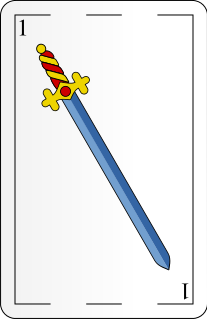 Ace of swords
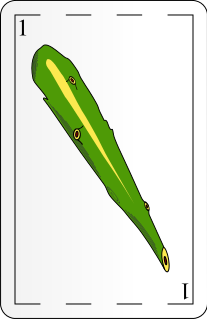 Ace of clubs
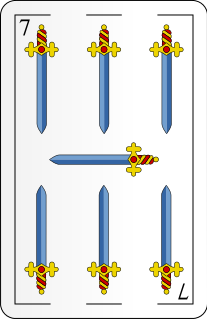 Seven of swords
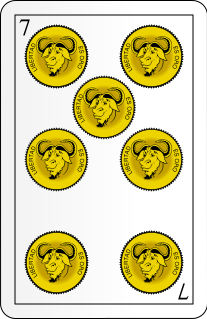 Seven of coins
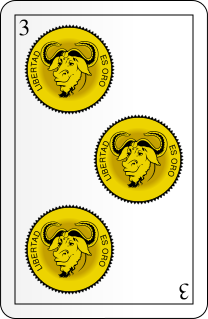 The four threes
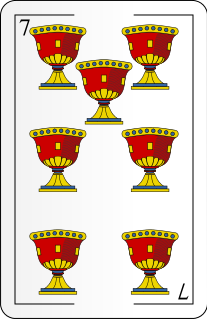
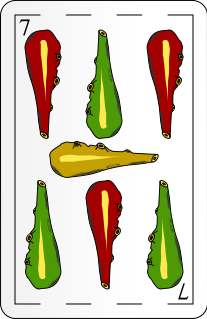 Seven of cups and seven of clubs
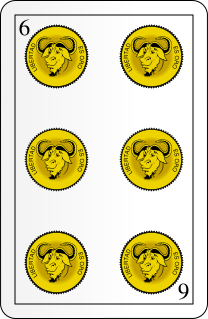 The four sixes
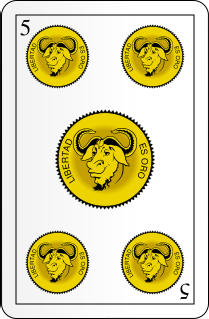 The four fives
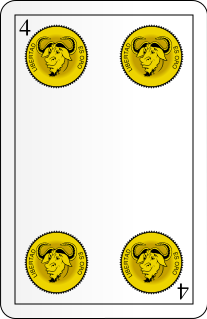 The four fours
The deal and the lead
Each player gets three cards, one at a time. The player sitting to the right of the dealer is the lead (mano): they play first and, if the Envit is tied, the winner is whoever comes first in the order of play starting from them. After each hand, the next player deals.
On Barajamos the room’s host deals first.
Tricks and ties
Each hand has up to three tricks. In each trick all four play a card and the highest wins. If the highest card is tied (two cards on the same step) between players of different pairs, the trick is a tie (parda); if the tied players are partners, the trick goes to their pair.
Whoever won the previous trick leads the next one. After a tie, whoever opened the tied trick leads again.
Three example tricks. You lead, then the opponent on your right, your partner and the other opponent play:
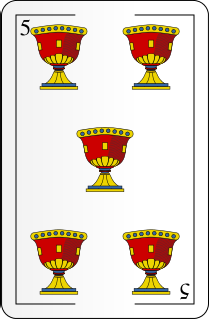
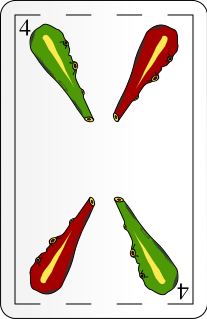 Three of coins, seven of coins, five of cups and four of clubs: the seven of coins is the highest card and the trick goes to the other pair.
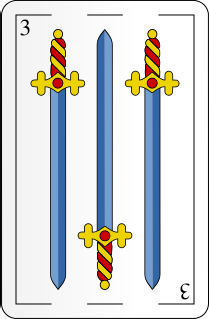
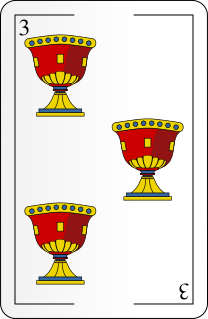
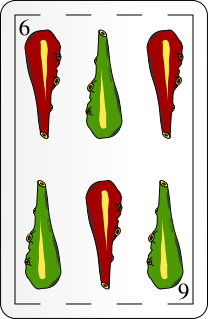 Three of swords, three of cups, six of clubs and five of coins: the two threes tie at the top, they belong to different pairs and the trick is a tie.
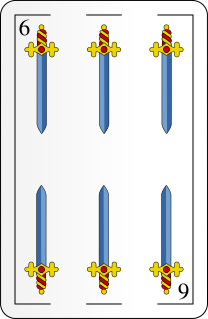 Seven of cups, four of coins, seven of clubs and six of swords: you and your partner tie at the top, so the trick goes to your pair.
| Tricks | The hand goes to |
|---|---|
| One pair wins two | That pair, without playing the third |
| One won and one tied in the first two | The pair that won |
| The first two tied | Whoever wins the third |
| One for each pair and one tie | The first to win a trick |
| Three ties | The lead player’s pair |
The Envit
The Envit is a separate bet on each player’s cards. Your count is 20 plus the numbers of your two cards of the same suit; with three of the same suit, the two highest count. If you do not have two of the same suit, your count is the highest number among your cards. The ace is worth 1, so the maximum is 33: the seven and the six of the same suit.
- Seven and six of coins and a three of cups: 33.
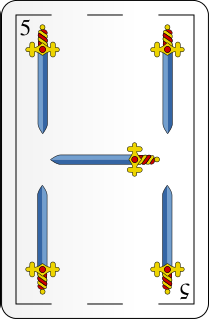
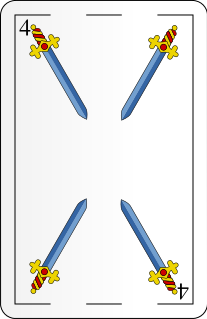 Five and four of swords and a seven of clubs: 29.
- Ace, seven and three of swords: the two highest count, 30.
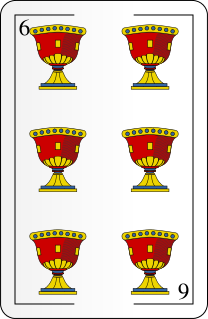 No two of the same suit: the highest number counts, 6.
The best count among the four players wins the Envit and their pair scores it. If there is a tie, whoever comes first in the order of play starting from the lead wins. On Barajamos the table works out the counts: nobody has to declare them or show their cards.
It is called on your turn, before you play your first card of the hand. Also when your pair is called Truc, if it is your turn and you have not played yet: the Truc waits for the Envit to be settled. Playing a card, folding, or calling or answering a Truc closes that chance, and once a Truc is accepted there is no more Envit in that hand.
| Bet | If accepted | If refused |
|---|---|---|
| Envide | 2 points | 1 point |
| Torne (answers the Envide) | 4 points | 2 points |
| Falta | What is left to close the cama (see below) | 1, 2 or 4 points |
Anyone in the other pair answers: they can accept, refuse or raise. An Envide is answered with Torne or Falta, and a Torne with Falta. The Torne is not repeated and the Falta is not raised. If a Falta is refused, whoever called it scores 1 point, or 2 or 4 if it answered an Envide or a Torne.
The Falta is worth 24 if both pairs are still in the bad ones. If not, it is worth what the leading pair needs to close the cama: at 15 to 8, the Falta is worth 9.
The Envit is scored at the end of the hand, with the cards each player held at the start, and before the Truc.
The Truc
Without bets, the hand is worth 1 point. Any player can call Truc while the cards are being played, even when it is not their turn, unless an Envit is pending.
| Bet | If accepted, the hand is worth | If refused, the caller scores |
|---|---|---|
| Truc | 2 | 1 |
| Retruc | 3 | 2 |
| Quatre val | 4 | 3 |
| Joc fora | The whole game | 4 |
Anyone in the other pair answers: they can accept, refuse or raise to the next level, and raising already accepts the previous one. After an acceptance, the next raise belongs to the pair that received the bet. If it is refused, the hand ends and the calling pair scores what it was worth before. The Joc fora cannot be raised.
With the Joc fora accepted, everything is at stake: the pair that wins the hand takes both camas and the game.
Scoring and the end of the game
At the end of each hand the Envit is scored first and then the Truc. If the Envit closes the cama, that hand’s Truc does not count in the new cama. A Falta between two pairs in the bad ones is worth 24 points, so it closes the cama.
If nobody has won yet, the next hand is dealt. The game ends when a pair closes its second cama.
Folding
On your turn to play a card, and if no bet is pending, you can fold (irse al mazo): you put down your cards and do not play the rest of the hand, but your partner carries on. If both fold, the other pair wins the Truc for whatever it is worth at that moment. The Envit is settled the same way, with the cards of all four, including those of whoever folded.
If someone loses the connection
Losing the connection is not folding and gives nobody any points. Your chair waits for you for a minute and, if you come back, you get your seat and your cards back. If you do not come back, the game is cancelled and everyone returns to the room, from where you can invite someone else.
How it is played on Barajamos
These choices are fixed at the Barajamos table:
- The host deals first and the deal goes round anticlockwise.
- Each cama is 24 points and the game is played to two camas.
- The Envit can only be called before the Truc is seen.
- The Envit is scored at the end of the hand, before the Truc, with the starting cards of all four, including those of whoever folded.
- Refusing the Joc fora gives 4 points; accepting it puts the whole game at stake.
- The table works out the points and deals the next hand without waiting.
Mistakes worth avoiding
- Calling the Envit too late. The Envit is called before you play your first card of the hand. Once you play a card, fold, or call or answer a Truc, you can no longer call it, and once a Truc is accepted nobody calls the Envit in that hand.
- Counting your points wrong. With three cards of the same suit only the two highest count, and without two of the same suit only your highest card counts. The ace is worth 1.
- Thinking every tie is a parda. A trick is only tied if players from different pairs tie at the top. If you and your partner tie, the trick is yours.
- Forgetting what settles a tie. With one trick won and one tied, the pair that won theirs takes the hand. If the first two are tied, the third decides, and with three ties the lead player’s pair wins.
- Taking the Falta for 24. It is only worth 24 if both pairs are still in the bad ones. If not, it is worth what the leading pair needs to close the cama.
- Thinking folding ends the hand. Whoever folds stops playing, but their partner carries on, and their points still count for the Envit.
Variants at other tables
Truc changes from one town to another. This is what varies most:
- The cama: at many tables it is 18 stones, 9 bad and 9 good, instead of 24.
- The Balearic Islands: in Majorca and Minorca the game is very similar, but the card order changes and face cards come in. In Minorca the strongest are called l’amo, la madona, el bastet and l’espaseta, and players call “Va al nou”, “Va al dotze” and “Cama fora”.
- Raises: in some areas, after Quatre val players go on with Cinc val, Sis val and more.
- The face-down card: in some areas, whoever plays a card face down has to play the rest of their cards face down too.
- The deck: sometimes cards are added to the 22, such as the twos.
Sources: the Catalan Wikipedia, the Museu d'Història de València and, on Minorcan truc, an article in Menorca.info. On Barajamos it is played with the rules on this page.
Glossary
- Cama
- Each of the two parts of the game. It closes on reaching 24 points.
- Malas and buenas
- The first 12 points of a cama are the bad ones (malas) and the next 12, the good ones (buenas).
- Hand (mano)
- The round of up to three tricks played with each deal. The player who leads first is also called the mano.
- Trick (baza)
- Each round in which all four play a card.
- Tie (parda)
- A trick tied between the two pairs.
- Envit
- A bet on each player’s count: Envide, Torne and Falta.
- Truc
- A bet that raises the value of the hand: Truc, Retruc, Quatre val and Joc fora.
- Folding (irse al mazo)
- Putting down your cards and not playing the rest of the hand.
- Senyes (signals)
- Gestures with which, at the traditional table, partners tell each other what cards they hold. There are no signals on Barajamos.
Shall we try it?
The best way to learn it is to play a hand. Against bots you go at your own pace.